Zari/Zardosi Embroidery or Aari embroidery
India, wrapped in the mystique, enhanced with the romance of fabled crafts, has one of the finest traditions of embroidery in the world. It has long been known for its embroidery with gold and silver threads called Zari. Zari is gold, and
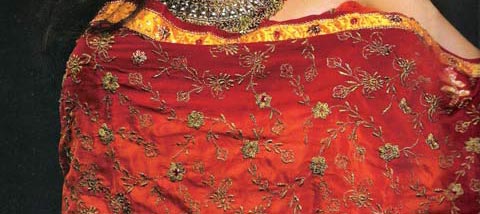
zardozi embroidery is the glitteringly ornate, heavily encrusted gold thread work.
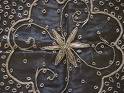
Zardozi the traditional art of court embroidery is the sheer magic of nimble fingers and imaginative designs, envisaged by the ensemble of lustrous metallic wire which was traditionally the silver wire coated/plated with gold, silk
threads, beads and stones.

Done with metal wire and metal pieces or sequins on velvet, satin and heavy silk bases, Zari is one of the most famous and elaborate techniques in metal embroidery. An ancient art, dating back to Rigvedic times, was used to adorn the dresses of Gods and Goddesses.
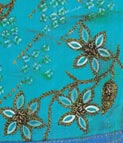
The original embroidery of Zari was done with pure silver wires coated with real gold known as Kalabatun. Though silver and gold threads have now been replaced with synthetic and artificial threads, the art remains the same.
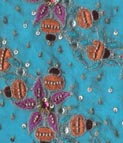
These days it is used to make exquisite evening dresses, coats, fashion accessories like purses, handbags, belts, shoes; ceremonial adornments like badges and insignia; furnishing accessories like cushion covers, wall hangings and boxes etc.
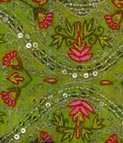
Popularly known as
Aari work, Zari, involves use of beads and a special needle known as Muthia which is similar to a
crochet needle.
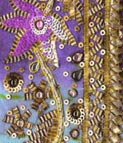
The difference between Aari and Zardozi work is in the method of embroidery and material used.
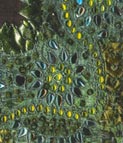
Zardozi uses Dabka (spring type of a thread), katori, tikena, and sitara (sequins). Both methods are used to create fascinating designs.
METAL WIRE:
How it is made?
The method is called 'Kalabatune'.
The process starts with the melting of metal ingot to make into bars known as 'paras', which is drawn to a length by gently beating it after heating.
The metal is then pulled through perforated steel plates to turn into a long wire after which comes the 'Tarkashi' process.
This is to reduce the wire to the required thinness like a whisp of hair using rubber/ diamond dyes (moulds). The last stage is called 'Budla' when the wire is finally flattened, now done by machines and then wound on silk/ cotton thread which when twisted becomes Kasab/ Kalabatune.
There are two types of embroideries:
1. Heavy work
2. Light work
Zardozi is the heavier type
Kamdani is the lighter type
In Zardozi, the stitches are very close to each other and they are elaborately done.
The lighter type Kamdani is used on finer fabrics and it is of a simpler kind and less elaborate. Zardozi is prepared with the use of 'budla' which are thin strips of metal.
GIZAI:
It is a circular thin wire resembling an insect of this name.SITARA: It is a small round metal piece to look like a star.
Zardozi is prepared on curtains, heavy coats, cushions, shoes and animal tappings.
Kamdani:
which is for lighter type is done on weaving apparels such as caps, scarves, etc.
In Zardozi, the design is with the twisted gold thread called Gijai. Gold and silver embroidery is done using any type of stitch.
1) Laid stitch/ wouching stitch, 2) Satin stitch, 3) Chain stitch, 4) Stem stitch and 5) Running stitch.
The
chain stitch resembles in counter part in
Kutch work and is generally used in sarees.
The stem stitch and the running stitch are used for a miscellaneous type of work.
The laid/ wouching stitch as it is called is important and suited in gold thread. It is generally used on cushion/ masnads (small gaddis) gold and silver embroidery is invariably done with cloth stitched over a wooden frame. Sometimes certain designs as leaves and petals of flowers are padded to give a raised effect.
In the Gota Kinari is in fine shaped birds, animals, human figures attached to the cloth and encased in wires of silver and gold while the space around is covered by coloured silk.
The overall effect is of enamelling. The most important feature in gota and Kinari work is the cutting of the woven gold border into various shapes and design, which are stitched on the cloth, thus creating a variety of textured patterns in the design.
Karchobi is divided into 4 types.
1) Kasab-Tiki:
Using gold and silver thread and spangles.
2) Jhik-Chalak: Using twisted thread called Jhick and zig-zag thread called chalak.
3) Bharat-Karachi: Using pieces of cardboard to provide a raised body for the design, the material being used as a padding.
4) Jhik-Tiki: Using twisted thread and spangles.
Gold and silver embroidery can be easily done on satin with a backruns lining. The design should be first traced on satin fabric and tracked to the backrun of the same size on the 4 sides. 7 inch needles and threads should be used to embroider the gold and silver work.
There are many types of
Zari threads. The thicker Kalabatune is braided gold thread used in the border while a thinner variety is used at the thinner edges for batwas, tassels, necklace strings.
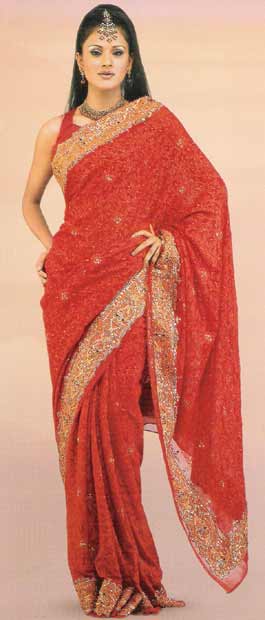
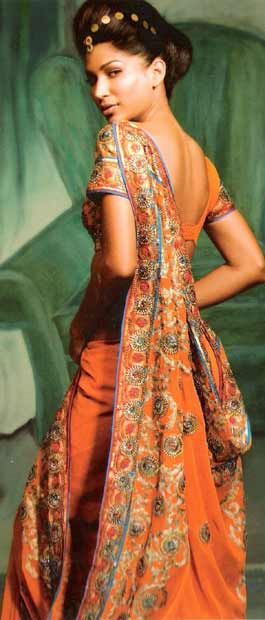
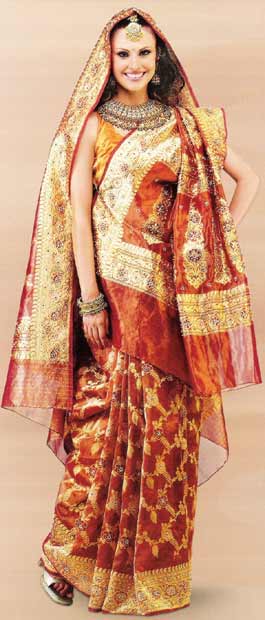
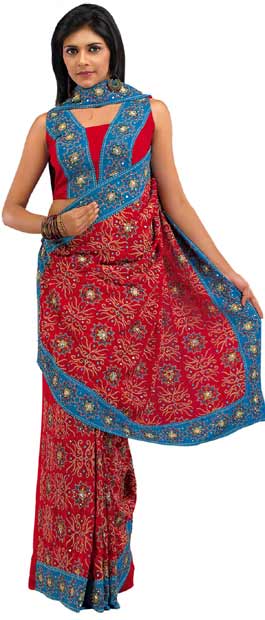
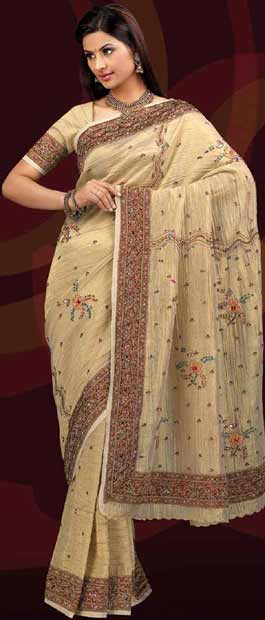
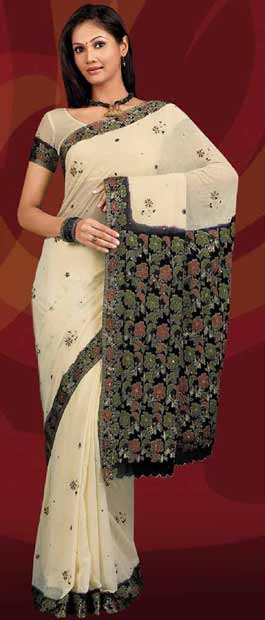
Tirora: It is a gold thread especially twisted using curves and complex designs. The dull Zari thread in 'Kora' and lustrous one in 'Chikna'. The design is first traced out on paper, pricked with pins, with fine powder lightly rubbed on it. Now-a-days, gold and silver embroidery is mainly done on sarees and choli pieces. The other articles embroidered are evening bags, slippers, belts.
DO U NEED TO LEARN MORE OR
YOU NEED TO DO AARI WORK IN YOUR SAREES :DO CONTACT +91-421-2200187
JOBWORKS ARE TAKEN
| Embroidery | Embroidery designs | Embroidered clothing | zardosi embroidery | Kutch embroidery | kantha embroidery |

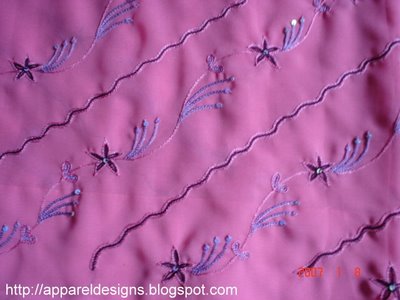
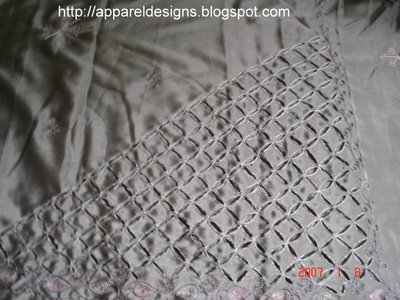


 | Embroidery | Embroidery designs | Embroidered clothing | zardosi embroidery | Kutch embroidery | kantha embroidery |




 Get More
 Kaftans are loose flowing apparels like a robe. They are commonly known as house dresses but with new innovative cuts and elegant embroidery rendered to them, they make for prefect evening wears as well.



